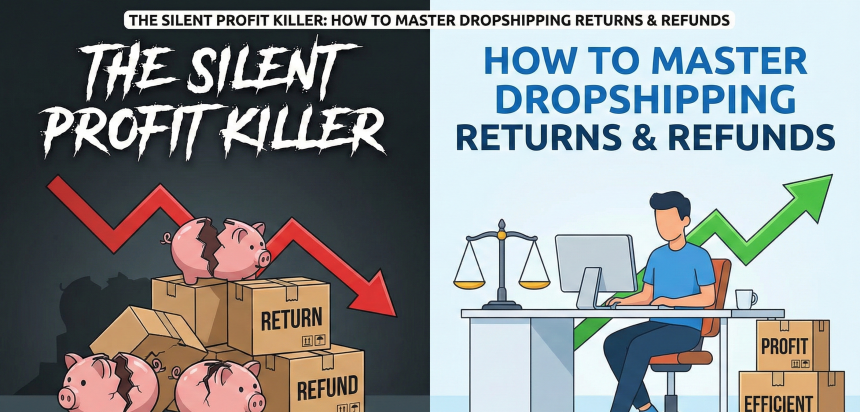
If you run a dropshipping store, you know the sinking feeling of seeing a “Return Requested” notification pop up. It’s an unavoidable part of eCommerce—data shows that online return rates in 2025 hovered between 17% and 30%—but in the dropshipping world, this comes with a unique layer of complexity.
- The Two Ways to Handle Logistics
- 1. Returns Come to You (The “Quality Control” Method)
- 2. Returns Go to the Supplier (The “Hands-Off” Method)
- 13 Strategies to Bulletproof Your Returns Process
- 1. Vet Your Suppliers First
- 2. The “Partial Refund” Hack
- 3. Automate the Headache
- 4. Be Strategic with “Free Returns”
- 5. Prioritize Store Credit
- 6. Pre-Sale Support Stops Returns Before They Happen
- 7. Clarify Who Pays for Shipping
- 8. Analyze the Data
- The Bottom Line
Since you don’t hold the inventory, you are the bridge between a frustrated customer and a third-party supplier. Handle it poorly, and you lose money and trust. Handle it well, and you can actually turn a return into a loyal customer; studies show 92% of consumers will buy again if the return process is easy.
Here is your comprehensive guide to navigating dropshipping returns without destroying your margins.
The Two Ways to Handle Logistics
Before you write a policy, you need to decide where the returns actually go. Generally, you have two options:
1. Returns Come to You (The “Quality Control” Method)
In this model, the customer ships the item to your home, office, or private warehouse.
- Best for: High-ticket items, niche brands, or retailers who want to inspect defects personally before approving a refund.
- The Upside: You control the experience. You can inspect the item to ensure the customer isn’t lying about damage (a crucial step since return fraud costs retailers over $100 billion annually).
- The Downside: You become a warehouse. You have to handle shipping logistics, store the item, and spend time inspecting packages.
2. Returns Go to the Supplier (The “Hands-Off” Method)
The customer ships the item directly back to the supplier or manufacturer.
- Best for: High-volume stores and automated businesses.
- The Upside: You never touch the product. It is streamlined and scalable.
- The Downside: You are at the mercy of your supplier’s efficiency. If they are slow to acknowledge the return, your customer gets angry at you.
13 Strategies to Bulletproof Your Returns Process
Managing returns isn’t just about damage control; it’s about strategy. Here are the best practices to keep your profits safe.
1. Vet Your Suppliers First
Your return policy is only as good as your supplier’s. Before listing a product, check the supplier’s terms. Do they charge restocking fees? Do they cover shipping on defective items? If their policy is rigid, yours will have to be too—or you’ll eat the cost.
2. The “Partial Refund” Hack

Processing a return costs retailers an average of $10–$30 per item. If a customer has a minor complaint or a slightly damaged item, offer them a 20-30% partial refund to keep the item. This saves you shipping costs and usually satisfies the customer instantly.
3. Automate the Headache
As you scale to meet the $445 billion global dropshipping market, manual returns become impossible. Use automation software like Spark Shipping to automatically route return requests to suppliers, generate RMAs (Return Merchandise Authorizations), and keep your inventory in sync across all channels.
4. Be Strategic with “Free Returns”
Free returns increase conversion rates, but they also skyrocket return rates. Instead of offering them to everyone, use them strategically:
- Offer free returns only for VIP customers or loyalty program members.
- Offer free returns on first-time orders to build trust.
- Limit free returns to high-ticket items where trust is a major barrier to purchase.
5. Prioritize Store Credit
Refunds drain your cash flow. Whenever possible, encourage store credit. Over 60% of customers are open to store credit if the process is easy. This keeps the money in your ecosystem and encourages a second purchase.
6. Pre-Sale Support Stops Returns Before They Happen
The best return is the one that never happens. Many returns are due to customers simply buying the wrong thing. Use live chat, detailed sizing guides, and high-quality images to help customers make the right choice the first time.
7. Clarify Who Pays for Shipping
Be explicit in your FAQ. A common standard used by many successful Shopify stores is:
- Defective/Wrong Item: You (the retailer) pay for return shipping.
- Buyer’s Remorse (Wrong Size/Changed Mind): The customer pays for return shipping.
8. Analyze the Data
Don’t just process returns; learn from them. If one specific shirt is returned 10 times for being “too small,” your size chart is wrong. If a specific supplier sends broken items constantly, cut them loose.
The Bottom Line
Returns are not a failure; they are a touchpoint. A customer who has an easy return experience is more likely to buy from you again than a customer who never had a problem at all.
Also Read : Understanding the Types of Freight Transport: A Comprehensive Guide (2026)