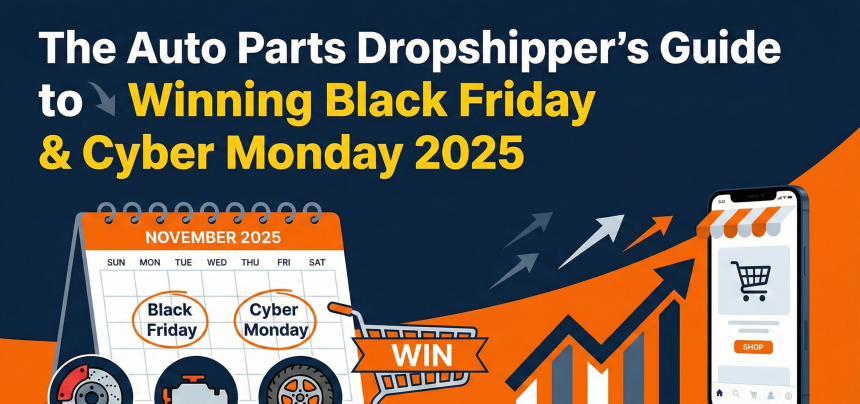
For automotive dropshippers, Black Friday and Cyber Monday (BFCM) are more than just shopping days—they are a massive stress test on every link in your supply chain.
Unlike selling t-shirts or gadgets, selling auto parts requires precision. Buyers need specific SKUs for time-sensitive repairs, and fitment accuracy is non-negotiable. Winning BFCM 2025 isn’t just about slashing prices; it requires the ability to run smart promotions, reach the right customers, and fulfill orders flawlessly.
Here is your operational blueprint for navigating the trends and challenges of the upcoming holiday season.
The 4 Trends Defining BFCM 2025

To capture market share this year, you need to understand the macro-trends shaping the automotive aftermarket.
1. Mobile Is Eating the Aftermarket
Today, over 56% of online sales happen on mobile devices. For auto parts retailers, this presents a unique challenge: complex fitment tools often break on small screens.
You must audit your storefront from a smartphone immediately.
- The “Thumb Test”: Are year/make/model selectors easy to tap? Do promo banners block navigation?
- Fitment Rendering: Frustrating interfaces drive bounce rates through the roof. Look at leaders like Tasca Parts, which allows users to select a vehicle and filters search results to show only compatible parts. This friction-free experience is essential for keeping mobile buyers on your site.
2. The “Black November” Shift
Consumers no longer wait for Friday. Black Friday has evolved into “Black November,” with 35% of consumers planning to start shopping as early as Thanksgiving Day.
- The Strategy: Shift from a one-day blast to a multi-phase campaign.
- The Angle: Focus on seasonal automotive needs. Follow the lead of giants like Advance Auto Parts, which utilizes early November to push winter-specific items like snow tires, de-icer, and battery bundles.
3. Owned Channels Are Your Secret Weapon
Paid ad costs surge during BFCM, and platforms are tightening restrictions on regulated categories. Your highest-leverage assets right now are your email and SMS lists.
- Segment for Success: Auto parts buyers are often repeat customers. If a customer bought floor mats for a Ford Explorer last month, use email automation to cross-sell weatherproof cargo liners for the same vehicle.
4. Operations Must Be Tight
Shoppers have zero tolerance for backorders or delays. In the dropshipping world, selling inventory you don’t actually have is a death sentence for your brand reputation.
- The Fix: You need real-time inventory synchronization. Platforms like Spark Shipping automate order routing and inventory updates, ensuring you never oversell a hot item.
How to Price Without Losing Your Shirt

With Adobe forecasting U.S. ecommerce sales to hit $253.4 billion this season, the appetite for spending is high—but so is the demand for discounts. Here is how to stay competitive without racing to the bottom.
Protect Your Margins with Logic
Discounts in many verticals will exceed 30%, but auto parts often have tighter margins. You cannot afford to guess. Use a cost-based pricing rule for every promotion:
- Know Your True Cost: Factor in supplier price, shipping, platform fees, and average ad spend.
- Set a Floor: Decide your minimum acceptable margin (e.g., 25%).
- The Formula: If a part costs you $40 and you need a 25% margin, your minimum price is $53.33.
Tip: Use dynamic pricing tools like Prisync to monitor competitors and adjust your prices automatically, ensuring you stay attractive while protecting your floor price.
Offer Value Instead of Just Discounts
If you can’t drop your price any lower, add value.
- Bundling: Combine maintenance items (oil, filters, wipers) into a “Winter Prep Kit.”
- Service Adds: Companies like CarID offer free installation on wheels and tires in certain areas. While you may not offer installation, you can offer free shipping thresholds or extended return windows to sweeten the deal.
Also Read : SEO for Dropshipping Stores: 7 Effective Ways to Boost Your Organic Traffic