What is dropshipping, and is it still a smart way to sell online in 2026? This guide breaks down the dropshipping business model, how it works, and what it takes to succeed in today’s competitive ecommerce landscape.
Whether you’re launching your first ecommerce store or comparing fulfillment options, we’ll cover the pros, cons, and alternatives to help you decide if dropshipping is right for you.
Key Takeaways
- Inventory-Free: Dropshipping lets you sell without inventory management. You run the storefront while a third-party supplier handles storage, packing, and shipping.
- Strategy is Everything: Profitability depends on your niche, supplier reliability, pricing, and marketing tactics.
- Brand Limitations: Traditional dropshipping offers less control over packaging and product quality, which can affect long-term customer loyalty.
- Print-on-Demand (POD): POD is a high-margin alternative to traditional dropshipping that allows for customization and branding.
What is Dropshipping?
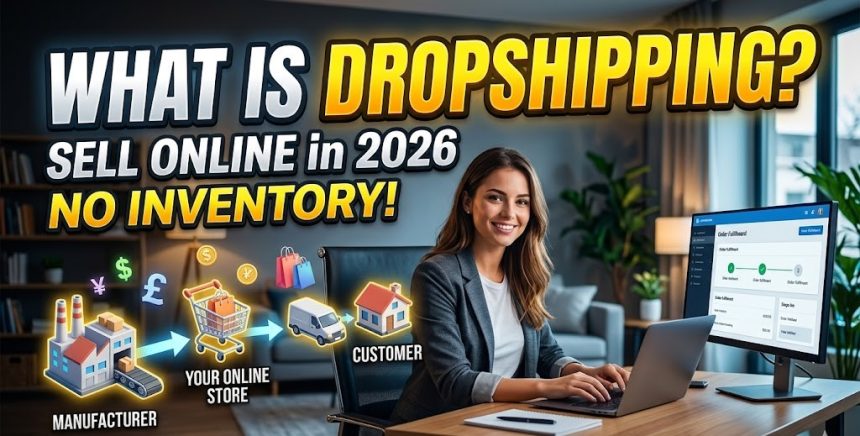
Dropshipping is a retail fulfillment method where a store doesn’t keep the products it sells in stock. Instead, when you sell a product, you purchase the item from a third party and have it shipped directly to the customer. As a result, the seller never sees or handles the product.
How it Works: The 4-Step Process
- Customer Places Order: A buyer purchases an item from your online store at your retail price.
- Order Forwarded: Your store automatically (or manually) sends the order details to your supplier.
- Supplier Fulfills: The supplier picks, packs, and ships the product directly to your customer.
- You Keep the Profit: You pay the supplier the wholesale price, and the difference is your profit.
Pros and Cons of Dropshipping
| Feature | Benefits | Challenges |
| Startup Cost | Very low; no need to buy bulk stock. | Low barriers to entry mean high competition. |
| Inventory | No warehouse or storage fees. | No control over stock levels or quality. |
| Location | Run your business from anywhere with WiFi. | Shipping times depend entirely on the supplier. |
| Margins | Low risk if a product doesn’t sell. | Lower profit margins due to individual item pricing. |
How to Start a Dropshipping Business
1. Find a Niche
Don’t try to sell everything. Focus on a specific category (e.g., eco-friendly pet supplies or “dark academia” home decor). Use Google Trends to identify high-demand areas and seasonal spikes.
2. Choose Your Platform
Most successful dropshippers use platforms like Shopify or WooCommerce. These integrate directly with supplier apps to automate your orders and sync inventory in real-time.
3. Vet Your Suppliers
Your supplier is your most important partner. Popular tools to find reliable partners include DSers for AliExpress or Spocket, which specializes in US and EU-based suppliers for faster shipping.
Tip: Always order samples! You need to know the shipping speed and product quality firsthand before a customer does.
4. Set Competitive Pricing
Calculate your retail price using this formula:
Wholesale Price + Shipping + Marketing Costs + Taxes + Desired Markup = Retail Price.
Is Dropshipping Still Profitable in 2026?
Yes. The global dropshipping market continues to grow, fueled by the rise of social commerce on platforms like TikTok and Instagram. However, the “get rich quick” days are over. Success in 2026 requires:
- Heavy Marketing: Consistent promotion via short-form video.
- Niche Authority: Being an expert in what you sell.
- Automation: Using tools like Klaviyo for automated email marketing to retain customers.
Print-on-Demand: The Evolution of Dropshipping
Traditional dropshipping involves selling generic products. If you want to build a real brand, Print-on-Demand (POD) is the superior choice.
With POD services like Printful, you can:
- Customize Products: Add your unique designs to apparel, hats, and home goods.
- Brand Your Packaging: Include custom labels and pack-ins that traditional dropshippers can’t offer.
- Higher Perceived Value: Custom-designed items command higher prices and better profit margins.
Also Read : The 5 Best eCommerce Analytics Tools In 2025/2026