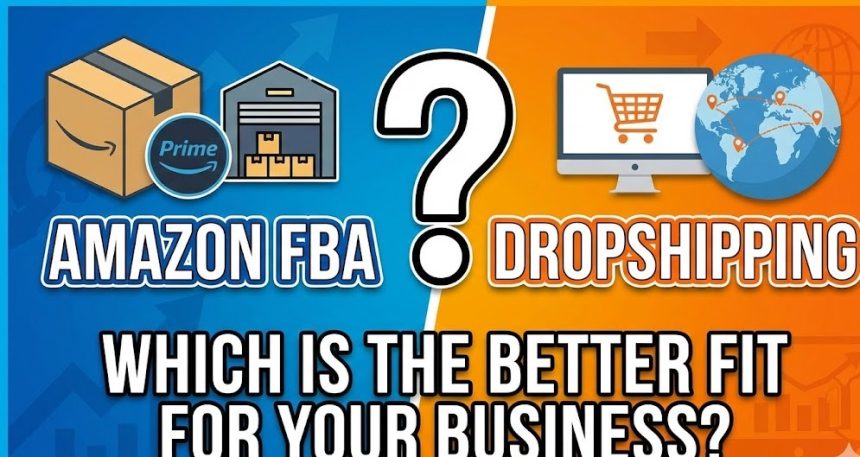
Many eCommerce sellers don’t realize this, but the fulfillment method you choose can make or break your business. Fulfillment by Amazon (FBA) and dropshipping are two solid fulfillment strategies to choose from. However, understanding their differences is vital for any seller.
- Understanding Amazon FBA
- What is FBA?
- How does FBA work?
- What are the Advantages of Using FBA?
- What are the Disadvantages of Using FBA?
- Understanding Dropshipping
- What is dropshipping?
- How does dropshipping work?
- What are the Advantages of Dropshipping?
- What are the Disadvantages of Dropshipping?
- The Verdict: Which Model is Best in 2026?
- Conclusion
Over 82% of Amazon sellers rely on FBA’s massive logistics network to boost sales and secure Prime placement. On the other hand, more than 30% of eCommerce stores use dropshipping for order fulfillment.
In this guide, we’ll help you understand Amazon FBA and dropshipping, their strengths and drawbacks, and which method is best suited to your eCommerce business.
Understanding Amazon FBA
Amazon FBA has become one of the most popular ways to sell products online, especially for eCommerce entrepreneurs looking to scale quickly. Most sellers achieve an Amazon FBA success rate of 27%, making about $1,000 to $5,000 in annual sales. Additionally, around 66% of consumers start their online searches for products on Amazon, making this an excellent platform to sell on.
What is FBA?
Amazon FBA is a Third-Party Logistics (3PL) service provided by Amazon, which means sellers don’t have to worry about the operational aspects of order fulfillment.
Instead of packing and shipping products yourself, you send your inventory to Amazon’s network of fulfillment centers. When customers place an order, Amazon picks, packs, and ships the product for you. This infrastructure allows small businesses to compete with major brands on Amazon’s marketplace.
How does FBA work?
- You purchase inventory: Most FBA sellers source products from manufacturers in bulk to maximize profit margins.
- Prepare shipment: You label and package goods according to Amazon’s strict requirements.
- Ship to Amazon: You send inventory to Amazon warehouses using discounted partner carrier rates.
- Amazon stores inventory: Your products are scanned and stored, often in Prime-eligible locations.
- Order & Fulfillment: When a customer buys, Amazon handles the picking, packing, and shipping.
- Customer Service: Amazon manages inquiries and returns 24/7.
- Payment: Amazon deducts fees and deposits your net earnings every two weeks.
What are the Advantages of Using FBA?
- Prime Access: You unlock the Prime badge, which can increase conversion rates by up to 78%.
- Buy Box Advantage: FBA sellers are far more likely to win the “Add to Cart” box than merchant-fulfilled sellers.
- Scalability: Amazon handles the heavy lifting, allowing you to sell 50 or 5,000 units without hiring extra staff.
- Customer Trust: Shoppers trust Amazon’s delivery speed and return policy.
What are the Disadvantages of Using FBA?
- Complex Fee Structure: You must account for fulfillment fees, monthly storage fees, and Long-Term Storage Fees if items don’t sell quickly.
- Strict Limits: Amazon’s Inventory Performance Index (IPI) can restrict how much stock you are allowed to send in.
- Return Policy Abuse: Amazon’s customer-centric return policy often leads to higher return rates, which the seller pays for.
Understanding Dropshipping
Dropshipping is one of the most accessible and low-risk ways to start an eCommerce business. Research has found that interest in dropshipping as a business model peaked at the beginning of 2025.
What is dropshipping?
Dropshipping is a model where an online business sells products without physically stocking inventory. Instead of purchasing inventory upfront, you partner with a supplier who ships products directly to customers on your behalf.
This model is commonly used on platforms like Shopify or WooCommerce, often with integrations that connect with suppliers like AliExpress or Spocket.
How does dropshipping work?
- Choose Niche: You identify trending products using tools like Google Trends.
- Set Up Store: You build a storefront on Shopify or list items on eBay.
- Customer Orders: A customer buys a product from you at retail price.
- Supplier Notification: The order is automatically forwarded to your supplier.
- Fulfillment: The supplier ships the item directly to your customer.
- Profit: You keep the difference between the retail price and the supplier’s cost.
What are the Advantages of Dropshipping?
- Minimal Investment: You don’t need thousands of dollars for bulk inventory.
- Low Risk: If a product doesn’t sell, you aren’t stuck with a garage full of boxes.
- Location Freedom: You can run the business from a laptop anywhere in the world.
- Broad Product Range: You can test dozens of products instantly without buying stock.
What are the Disadvantages of Dropshipping?
While accessible, dropshipping comes with significant challenges that 2026 sellers must navigate:
👎 Lower Profit Margins Since you aren’t buying in bulk, your cost per unit is higher. With intense competition, dropshipping margins often hover around 15-20%, compared to the 30-50% often seen with private labeling or FBA.
👎 Lack of Quality Control You never see the product before it reaches the customer. If a supplier sends a damaged or low-quality item, you take the blame, not them. This can lead to negative reviews and chargebacks.
👎 Shipping Complexities If a customer orders three items from three different suppliers, they will arrive in three separate packages at different times. This can confuse customers and lead to support tickets. Furthermore, shipping from overseas suppliers (like those in China) can take 2-4 weeks, which is a hard sell in the age of Amazon Prime.
👎 Inventory Volatility Since you don’t control the stock, a supplier might run out of a popular item without telling you. You might sell a product only to realize you can’t fulfill the order, forcing you to cancel and refund the customer.
The Verdict: Which Model is Best in 2026?
Choosing between Amazon FBA and dropshipping depends entirely on your budget, risk tolerance, and long-term goals.
Choose Amazon FBA If:
- You have capital ($1,000+) to invest upfront in inventory.
- You want to build a scalable brand with fast shipping (1-2 days).
- You prefer to be “hands-off” with logistics and customer service.
- Amazon Seller Central data shows FBA businesses generally have higher long-term exit multiples (resale value) than dropshipping stores.
Choose Dropshipping If:
- You have a limited budget ($0-$500) and want to avoid financial risk.
- You want to test product ideas quickly before committing to bulk orders.
- You are strong at digital marketing (Facebook Ads, TikTok) and driving your own traffic.
- You want to learn the ropes of eCommerce without the pressure of warehousing.
Conclusion
In 2026, the lines between these models are blurring. Many successful sellers now use a hybrid strategy: they use dropshipping to validate a winning product with low risk, and once they have consistent sales data, they switch to Amazon FBA to improve margins and shipping speed.Ultimately, Amazon FBA is a logistics powerhouse best for brand building and scale, while dropshipping is the ultimate low-barrier entry point for new entrepreneurs. Whichever path you choose, success relies not just on the model, but on product research and marketing execution.
Also Read : 10 Best Dropshipping sites for E-commerce