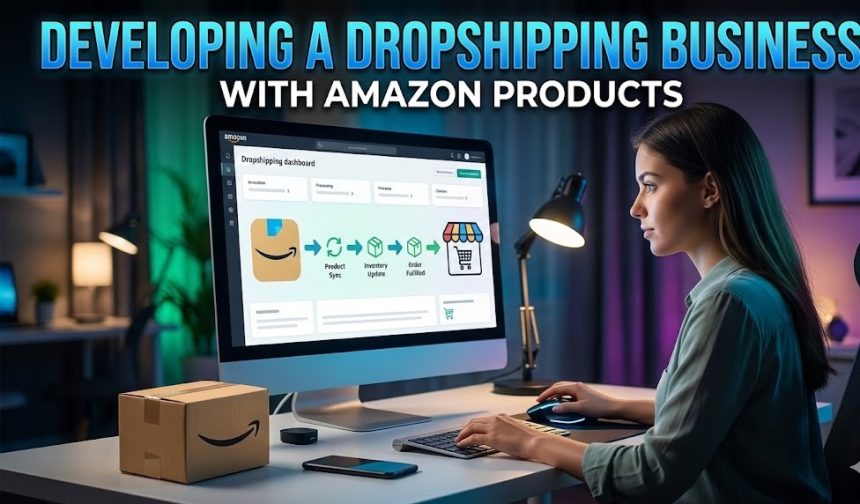
To develop a dropshipping business selling Amazon products, you must treat the platform as your primary wholesaler and distributor. This model allows you to leverage Amazon’s vast infrastructure to find “winning products” that sell easily while maintaining zero physical stock.
Advantages of Amazon Dropshipping
Starting an online business through this method offers several key logistical and financial benefits:
- Minimal Startup Costs: You avoid all storage constraints because products remain at the supplier’s premises until purchased.
- Zero Inventory Management: Amazon handles the shipping to the end customer, meaning you do not personally handle the products.
- Speed to Market: Because you do not need to manage stock, your business can be set up very quickly.
- Process Automation: Numerous free online applications allow for the full automation of the dropshipping process, saving time for strategic tasks.
- Data-Driven Sourcing: Amazon provides tools to measure user behavior, giving you essential data on high-demand items before you commit.
Potential Disadvantages to Manage
While lucrative, there are specific operational risks that require careful management:
- High Competition: Low barriers to entry mean many competitors may sell the same products, often resulting in aggressive price wars.
- Delivery Delays: When shipping directly from manufacturers, delivery to the end customer can take anywhere from weeks to months.
- Quality Control: You have limited control over the quality of products delivered from the manufacturer, and shipping damage can negatively impact your shop’s reputation.
Step-by-Step Implementation Guide
To transition from theory to practice, follow this operational workflow:
- Register a Seller Account: Visit sellercentral.amazon.com to set up your account and specify your business type (entrepreneur, company, etc.).
- Identify Winning Products: Look for items with high demand and low competition; ideally, aim for 100 to 300 sales per month with an average price between $20 and $35.
- Vet Suppliers: Research B2B sites and user reviews to find reliable dropshipping players, focusing on delivery times and product quality.
- Create Product Listings: Use your seller account to build detailed listings and understand your specific commission structures.
- Order Samples: It is essential to have a sample of every product you sell so you are personally aware of the quality and features.
- Market Your Brand: Promote your products on popular social networks, focusing on the specific needs of your target customers.
Expert E-commerce & Dropshipping Resources
- Amazon Seller Central: The official portal to manage your Amazon dropshipping business and access the Selling Partner API.
- Minea: Adspy & Product Research: A specialized tool to identify winning products and analyze competitor ad strategies across social media.
- Shopify: How to Dropship on Amazon: A comprehensive guide on integrating external storefronts with the Amazon marketplace.
- BigBuy: B2B Dropshipping Wholesaler: A major European marketplace used by dropshippers to source and sync products.
- AliExpress: Global Sourcing for Dropshippers: A primary source for comparing products highlighted on TikTok Shop and Amazon.
Conclusion
It is entirely possible to build a successful dropshipping business using Amazon products, provided you balance the platform’s logistical advantages with the risks of high competition and quality control. By utilizing automation through the Selling Partner API and focusing on high-demand, low-competition niches, you can scale your store efficiently in 2026.
Also Read: 10 Best Dropshipping sites for E-commerce