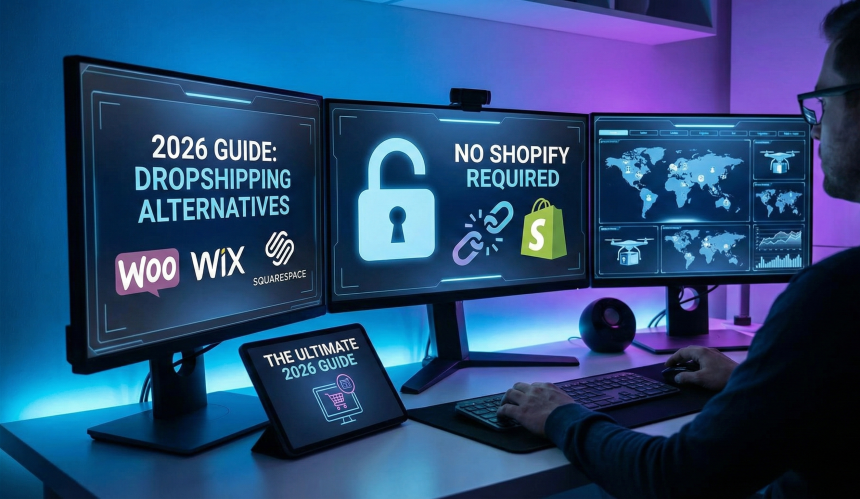
Did you know that over 27% of online retailers are now leveraging dropshipping as their primary business model? It is a massive industry, but there is a common misconception that Shopify is the only way to play the game.
While Shopify is a giant, it is not the only option. In fact, for many entrepreneurs, it might not even be the best option. Whether you are looking to lower your monthly overhead or seeking more customization, there is a whole world of alternatives out there.
Here is your comprehensive guide on how to build a successful dropshipping empire in 2026—without touching Shopify.
Why Look Beyond Shopify?
Shopify is user-friendly, but it comes with monthly subscription fees and transaction fees that can eat into the thin margins of a startup. By exploring alternatives, you can often find:
- Lower Startup Costs: Some platforms are free to start.
- More Control: Open-source platforms give you total ownership of your site.
- Built-in Traffic: Marketplaces bring the customers to you.
Step 1: Choose Your Platform
If you aren’t using Shopify, where should you build your store? Here are the top three contenders for 2026.
1. WooCommerce (The Flexible Choice)
WooCommerce is a free plugin that turns a WordPress site into a fully functional store.
- Pros: It is open-source, meaning you have 100% control over design and data. There are thousands of free plugins.
- Cons: You need to handle your own hosting and security.
- Best For: Tech-savvy entrepreneurs who want total customization on a budget.
2. Wix (The User-Friendly Choice)
Wix is famous for its drag-and-drop builder. It allows you to create a stunning store without writing a single line of code.
- Pros: Extremely easy setup and beautiful templates. Their Business Basic plan is often cheaper than Shopify’s basic tier.
- Best For: Beginners who prioritize design and ease of use over complex technical features.
3. BigCommerce (The Scalable Choice)
BigCommerce is a robust platform designed to grow with you. Unlike other platforms that might crash under heavy traffic, BigCommerce is built for volume.
- Pros: It has excellent built-in SEO features and supports multi-channel selling (selling on Facebook, Instagram, etc.) right out of the box.
- Best For: Sellers who plan to scale rapidly and process high volumes of orders.
4. Marketplaces (eBay & Amazon)
You don’t always need your own website. Platforms like eBay and Amazon have millions of active buyers.
- Pros: Instant access to traffic.
- Cons: High competition and strict seller rules.
Step 2: Source Reliable Suppliers
Your business is only as good as your supplier. If they ship late, you get the blame.
Use Verified Directories
Don’t just guess. Use directories like SaleHoo or Worldwide Brands. These platforms vet suppliers, ensuring you aren’t dealing with scammers.
Direct Sourcing
You can also browse massive marketplaces like AliExpress to find products.
- Pro Tip: Always order a sample first. Check the shipping speed and the quality before you ever list the item on your store.
Step 3: Marketing Your Store
Without Shopify’s ecosystem, how do you get sales?
- SEO (Search Engine Optimization): Use tools like Google Trends to find out what people are searching for. Write blog posts and product descriptions that target those keywords to get free traffic from Google.
- Social Media: Platforms like Instagram and Pinterest are visual goldmines. Post high-quality videos of your products to drive organic engagement.
- Paid Ads: If you have the budget, Facebook and Google Ads are the fastest way to test if a product will sell.
Step 4: Automate Your Orders
You don’t want to manually copy-paste addresses all day. Use automation tools like AutoDS or Spocket. These tools integrate with WooCommerce and Wix to automatically send order details to your suppliers, saving you hours of work.
Conclusion
Dropshipping without Shopify is not just possible; for many, it is more profitable. By choosing the right platform like WooCommerce or Wix, sourcing from reliable suppliers, and mastering your marketing, you can build a thriving business with lower overheads.
The tool doesn’t make the business; the strategy does. Pick your platform and start selling today.
Also Read : WooCommerce vs. Shopify in 2026: Why AI Consultation Changes Everything